

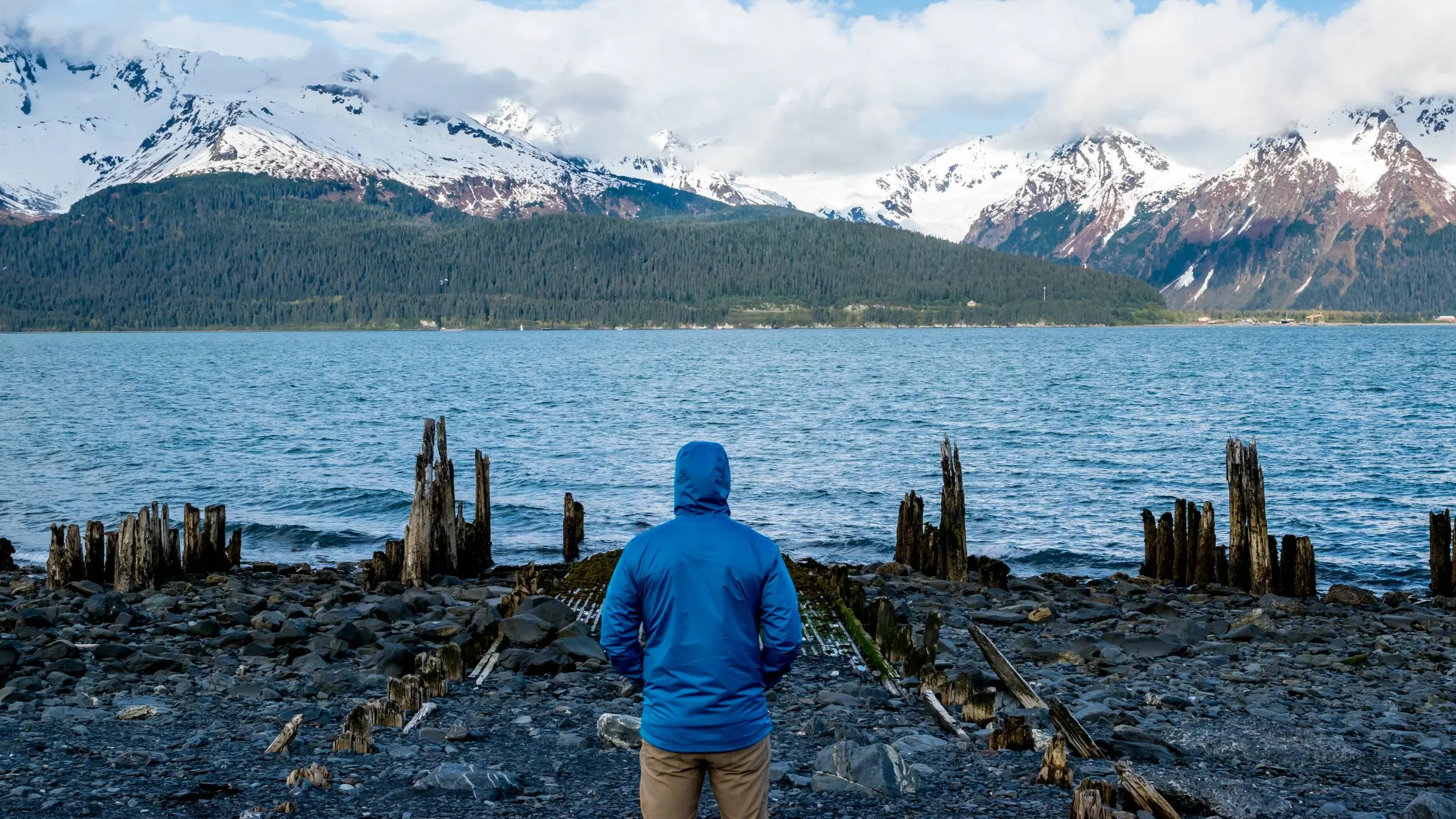
In Defense of Solitude: What an Alaskan Wilderness Legend Taught Me About Being Alone
After my divorce, I traveled deep into Alaska searching for perspective. Following the path of legendary outdoorsman Dick Proenneke, I discovered that solitude isn’t always something to escape from—it can also be a way to reconnect with yourself.
The most isolated journey of my life began when I stepped off a small floatplane onto the rocky shoreline of Upper Twin Lake in Alaska’s Lake Clark National Park.
I had traveled thousands of miles from New Jersey to Alaska to explore the handmade cabin of Richard “Dick” Proenneke, the self-taught naturalist whose extraordinary life in the wilderness became famous through the PBS documentary Alone in the Wilderness.
Proenneke spent nearly 30 years living by himself in the Alaskan wilderness. He built his own cabin by hand, studied the natural world around him, and created a life far removed from modern society. He never married, never had children, and shared his remote home mostly with wildlife—including the birds he fed and the occasional bears that tested his wooden walls.
During a ranger-led tour of his cabin, another visitor looked around the tiny handmade home and quietly said:
“He must have been lonely out here.”
That question stayed with me.
The Difference Between Being Alone and Being Lonely
We often treat loneliness and solitude as the same thing. But Proenneke’s life suggested something different.
Loneliness is the feeling of being disconnected. Solitude is the choice to step away, reflect, and exist without constant noise or distraction.
When I arrived in Alaska after my divorce, I wasn’t looking for a simple escape. I was searching for a way to understand what comes after losing a familiar version of your life.
The wilderness did not provide a quick answer. It didn’t erase pain or suddenly make everything clear.
Instead, it offered something quieter: space.
Space to think. Space to listen. Space to discover that being alone does not automatically mean being empty.
Learning From a Self-Reliant Life
Proenneke’s story is fascinating because his isolation wasn’t about rejecting the world. It was about creating a deeper relationship with it.
Every part of his cabin reflected patience and intention. He shaped wood by hand. He tracked seasons. He observed animals. He paid attention to details most people rush past.
His life was built around self-reliance—not as a rejection of other people, but as a reminder that we are capable of more than we often believe.
Modern conversations often focus on a “loneliness epidemic,” especially among men. Many people struggle with isolation, lack of community, and difficulty building meaningful connections.
But Proenneke’s example shows another side of the story: sometimes a little time alone can be healthy. Solitude can help rebuild confidence, encourage creativity, and create a stronger relationship with yourself.
What the Wilderness Really Gave Me
Standing beside Proenneke’s cabin in Alaska, I realized I wasn’t searching for his exact lifestyle.
I wasn’t looking to disappear into the woods for decades.
What I admired was his ability to be comfortable with himself.
In a world filled with constant notifications, opinions, and expectations, choosing moments of solitude can feel almost rebellious. Yet those quiet moments may be where we rediscover what matters.
The wilderness did not give me a cure for loneliness.
It gave me a different perspective.
Being alone is not always a problem to solve. Sometimes it is an opportunity to slow down, rebuild, and learn how to live with yourself again.