

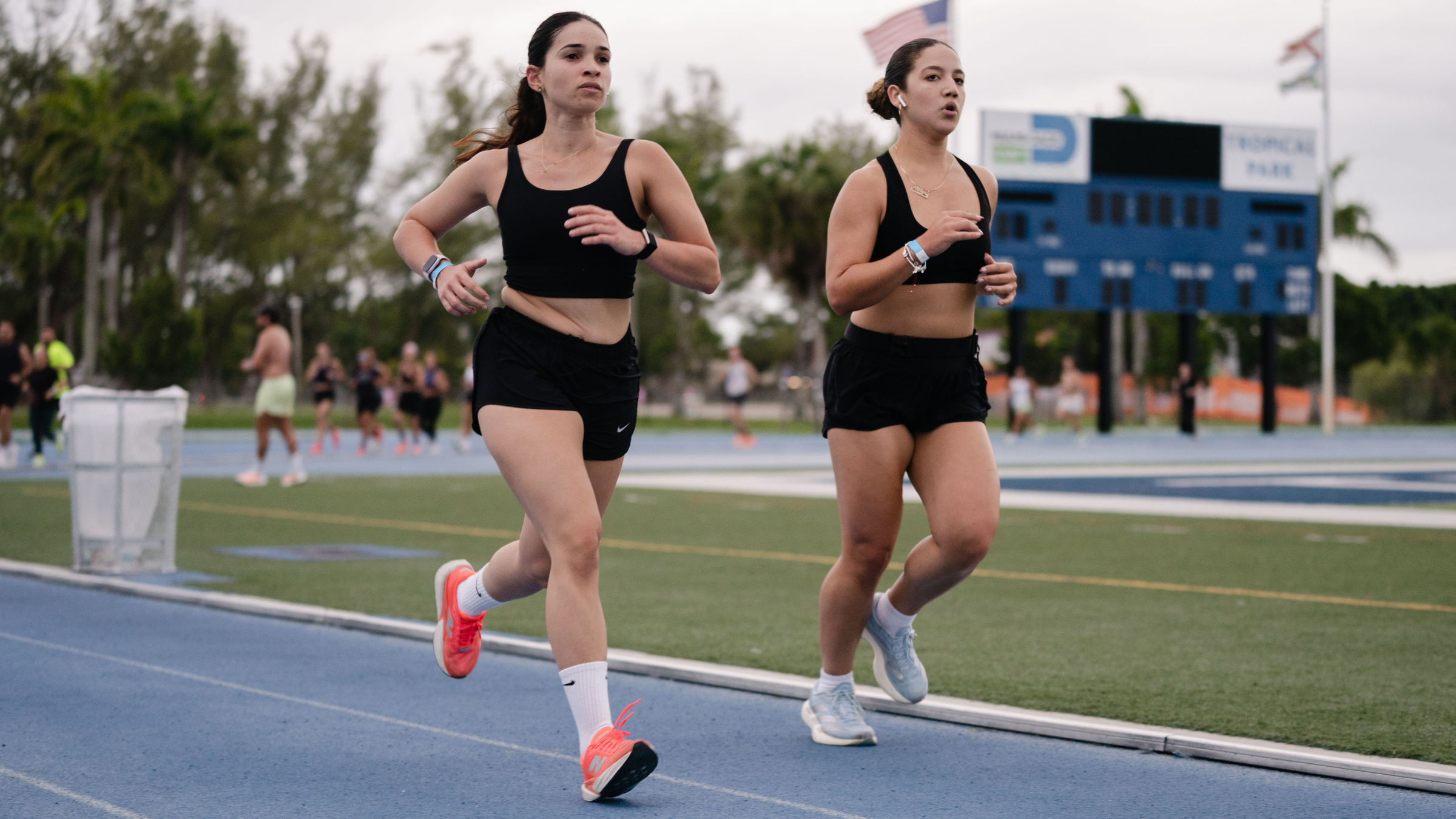
This Track Workout Gets Tougher Every Round—and Builds the Strength Runners Need
Speed isn’t the only measure of becoming a better runner. For many athletes, true progress comes from developing the strength to maintain good form, control pace, and stay mentally focused when fatigue starts to take over.
This classic track session is designed around progressive fatigue. The intervals gradually get shorter and faster, forcing runners to adapt as their legs become tired. It teaches an important racing skill: staying composed and powerful when the hardest part of the effort arrives.
For coaches, this type of workout is a controlled way to simulate the pressure of competition. For athletes, it becomes practice for those moments when breathing gets heavy, muscles start burning, and the temptation to slow down appears.
The Workout
2 × 800 meters
- Effort: 7/10 RPE (around half marathon effort)
- Recovery: 90 seconds after each interval
4 × 400 meters
- Effort: 8/10 RPE (around 10K effort)
- Recovery: 60 seconds after each interval
4 × 200 meters
- Effort: 9/10 RPE (around 5K effort)
- Recovery: 60 seconds after each interval
How to Run It Properly
Think of this workout as one continuous progression rather than three separate workouts. Each section prepares you for the next challenge.
Start Strong on the 800s
The opening 800-meter repeats should feel controlled but demanding. Focus on smooth breathing, relaxed shoulders, and consistent pacing.
You should finish each repetition thinking: “I could do another one if I had to.”
The goal is to build strength without spending all your energy too early.
Increase the Pressure on the 400s
The 400-meter intervals are where the workout starts to become more challenging.
Increase your speed while keeping your mechanics under control. Avoid reaching too far with your stride or letting your form collapse as fatigue builds.
Stay tall, keep your cadence quick, and maintain efficient movement.
Finish Fast on the 200s
By the final set, your legs should already feel tired. That is exactly the purpose.
The 200-meter repeats teach you how to generate speed when your body wants to slow down. Focus on quick turnover, strong arm drive, and staying relaxed rather than sprinting recklessly.
These should feel difficult—but controlled.
Why This Workout Makes You Stronger
This session improves more than just speed.
Physically, it trains your body to maintain efficient running mechanics under fatigue. Instead of falling apart late in a race, you learn how to keep producing power when your muscles are tired.
Mentally, it builds confidence. Every time you complete a faster interval while already fatigued, you prove that you can handle discomfort and keep moving forward.
The Main Benefit
The workout follows a simple progression:
- 800s: Build endurance and strength at a controlled hard effort
- 400s: Add speed while maintaining efficiency
- 200s: Practice finishing with power on tired legs
Together, these intervals develop the ability to hold race pace longer, change gears late, and stay strong when other runners begin to fade.
The biggest improvement doesn’t happen when the workout feels easy—it happens when you learn to stay focused after it gets hard.